
Northglenn Previous Residents Source Years
The previous residents trail combines land records with historical publications. A previous residents search does not begin with a generic name search. First identify the parcel, county, legal description, and time span. Then use a recorder, directory, newspaper, permit, archive, or city study that can speak to that specific place.
| Source | Local years or coverage | Where held | What it shows |
|---|---|---|---|
| Adams Landmark | Online cutoff not exposed | Adams Clerk & Recorder | Grantor, grantee, deed, lien, plat, release, legal description |
| Weld recorder | 1865 to present | Weld Clerk & Recorder | Section 36 instruments, maps, grantor and grantee chain |
| Site-history directory studies | 11165 Irma, 1962 to 2020; 112th and Washington, 1968 to 2013 | Northglenn city-hosted reports | Dated businesses, offices, permits, and site events |
| DPL and CU directories | 1870s to late twentieth century generally | Libraries and digital collections | Name, street, phone, occupation, business, reverse entry |
| State Archives Adams collections | Marriage, birth/death, probate, plats, recorder series | Colorado State Archives | Historical county and family evidence |
| CU Sanborn collection | 1883 to 1922; no Northglenn map found | CU Digital Library | Buildings and land use where a mapped city is covered |
The dates describe collection evidence, not a complete annual Northglenn residents directory. A gap is a finding that should stay visible.
Choose a Parcel for Northglenn Past Residents
A street name is too broad for a backward house history. Normalize the number, directional, street type, unit, postal city, state, and ZIP with USPS. Then use Adams Property Search or Weld Basic Property Search to save the parcel or account, owner of record, situs, subdivision, and legal-description clue. A Northglenn postal label cannot settle the Adams or Weld question.
Adams GIS can help with parcel geometry, splits, merges, subdivisions, and surveys. The county says GIS is information-only and not an official survey. A plat or recorded instrument is the stronger source for a legal boundary. The assessor-to-recorder bridge matters because Adams indexes grantors and grantees and has no tract index.
- Parcel
- The county assessment unit that ties an account to a physical property and map context.
- Legal description
- The recorded land wording that can carry a chain through lot, block, subdivision, or older land references.
- Owner of record
- The person or entity named in an assessment or instrument, not automatically the person who occupied the address.
- Historical label
- The county, subdivision, telephone, postal, or city name used by a source in its own period.
Save the result date. A live parcel card was not available in the research inspection, so no owner, value, or mailing address should be invented.
Tracing Northglenn Past Owners Through Deeds
Adams Landmark begins the deed trail with a name, document, book and page, consideration, record-date range, reception or instrument number, or legal search. Use the current parcel result to find an owner or grantee, then read the instrument for the prior deed reference and legal description. A deed chain is a chain of recorded property interests, not a chain of occupants.
For each step, save the recording date, reception or instrument number, document type, grantor, grantee, consideration when shown, legal description, prior reference, and image or copy status. A grantor may be a seller, trustee, lender, estate, or organization. Similar names need spelling, date, and entity-capacity checks.
- Confirm the Northglenn address, parcel, county, and legal description.
- Search the current owner or grantee in the Adams grantor and grantee index.
- Read the instrument and follow its prior-deed reference.
- Repeat the name and date search for the earlier grantor or grantee.
- Place the dated owner chain beside directory, permit, newspaper, and voter clues without merging their roles.
Adams recording fees include $43 per document effective July 1, 2025, while copy, certification, search, map, and card charges follow the county schedule. Verify the current fee before ordering.
Screenshot source: the Adams Landmark recorder portal shows the grantor and grantee search surface used for the Adams portion of Northglenn.
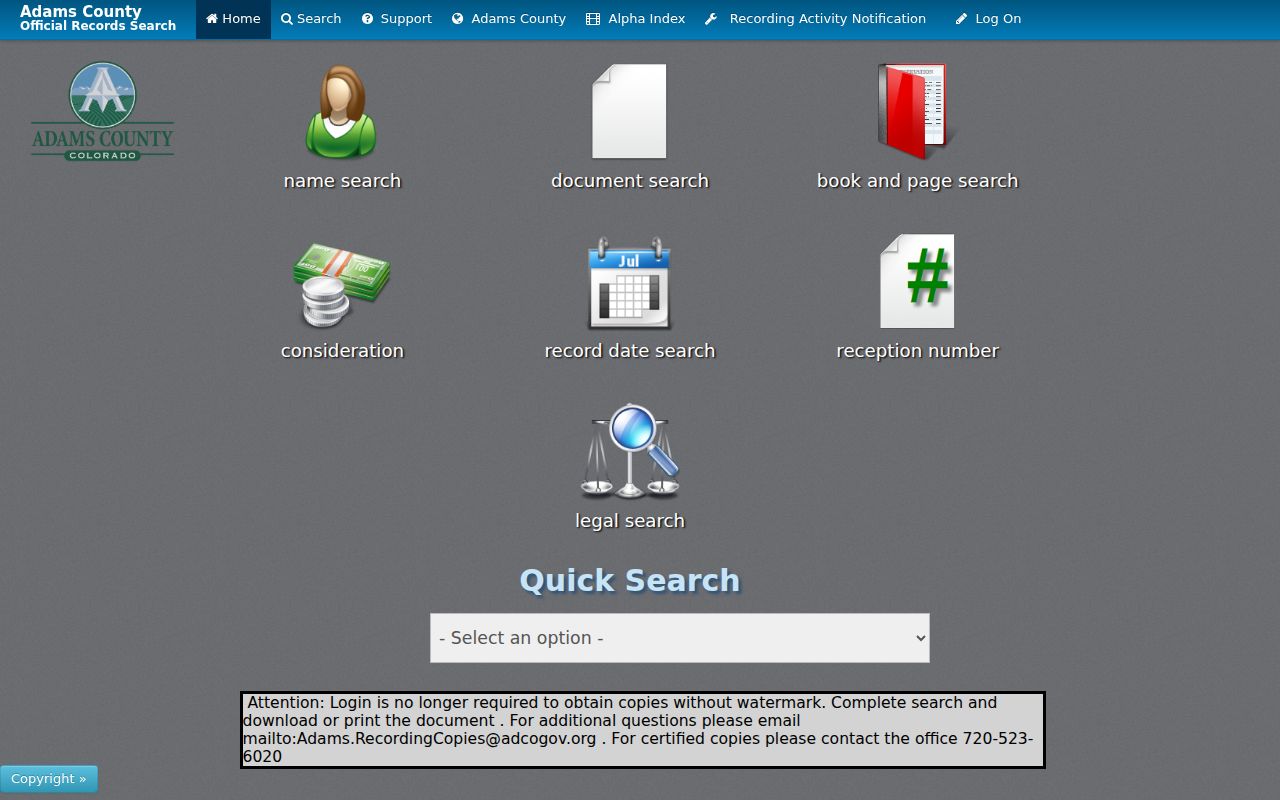
The image is a portal view, not a live target deed. No person, consideration, or reception number should be inferred from the screenshot.
Northglenn's Weld Section 36 Deed Route
The Weld County exception needs its own backward trail. Weld's self-service recorder documents recorded documents and maps from January 1, 1865, with grantor, grantee, date, document type, and reception-number searches. Its help material says the index is a guide and no automated searches are performed.
Use Weld Basic Property Search for owner, address, account, subdivision, parcel, section-township-range, or API number clues. Then move to the recorder and read the legal description. Weld recording costs $43 per letter or legal-size document, with its own documentary-fee and copy rules. Only Greeley accepts recording, and mail, express, walk-in, and e-recording routes are listed by the county.
Screenshot source: the Weld recorded-document self-service index shows the alternate county route for a Northglenn previous-residents search.
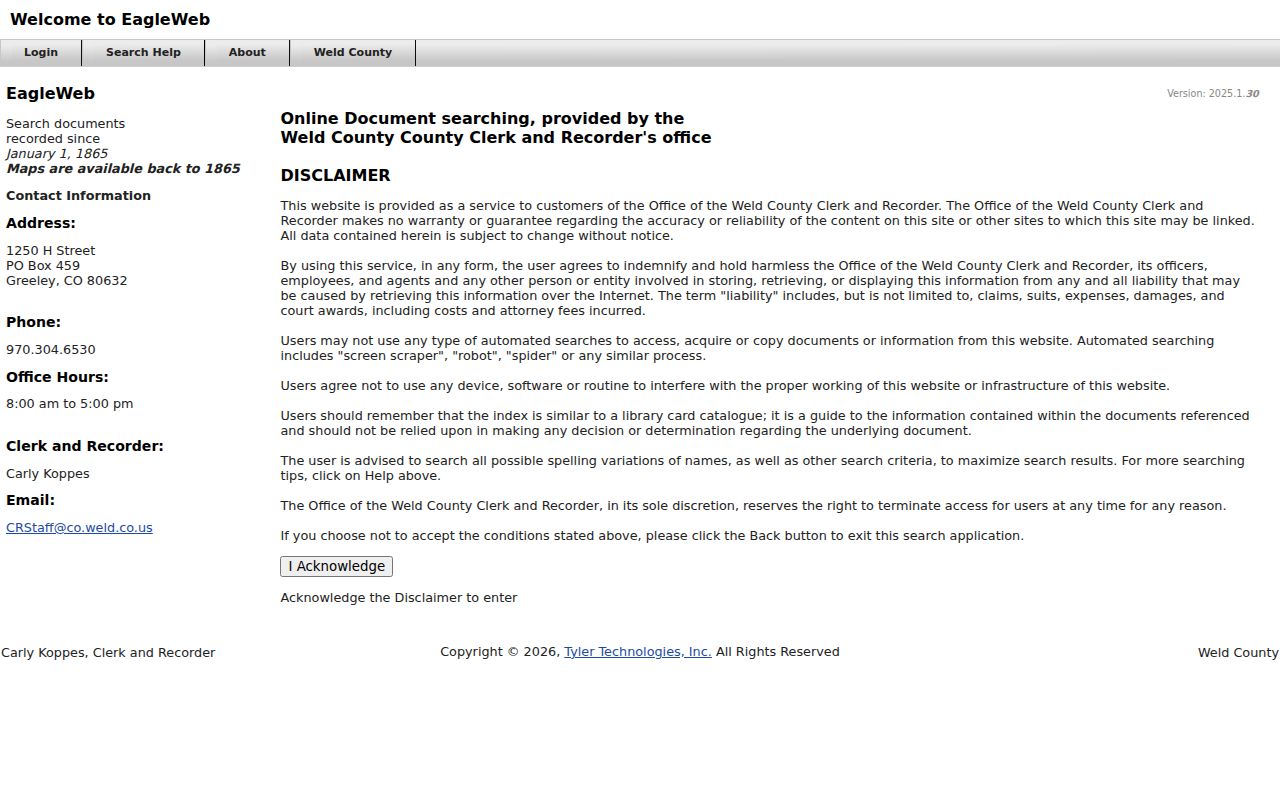
The capture supports the documented fields and coverage. It is not a live Northglenn property result.
A failed Adams result and a successful Weld result are not contradictory when the address is in the boundary exception. County routing is part of the house history.
Northglenn Past Households: Directories and Obituaries
Past residents are usually found between deed dates, not inside the deed chain itself. DPL and CU directories can provide a dated name, street, occupation, spouse notation, phone, or reverse entry. Newspapers and obituaries can supply a public notice or relationship lead. A census year can give a household snapshot when the geography and access rules fit. Each clue needs its own publication date and source label.
Pair a directory year with the closest independent record, then keep the conclusion narrow. A previous residents question may begin with a name, but the answer still needs an address and date. “Listed at the address in a telephone directory” is different from “owned the parcel.” “Business at the site” is different from “household.” If the person appears in a voter file, write “dated voter-file address” and do not publish protected information.
Screenshot source: the CU digital directories collection shows the catalog, date, text, and reverse-street controls used to test a past-address clue.
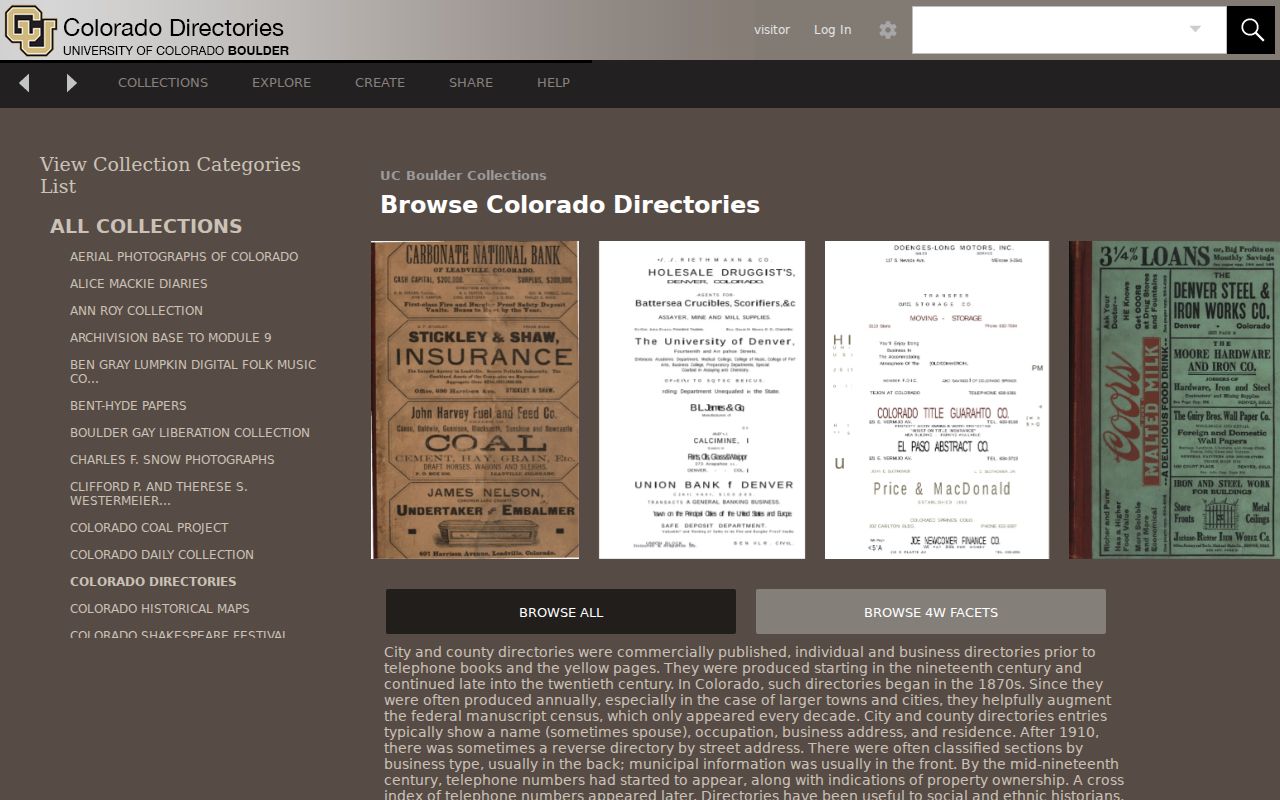
The collection view records the research controls, not a live Northglenn household result.
- Choose an address year and the historical label used at that time.
- Search DPL's place and year index, then CU's catalog, text, date, and reverse-street controls.
- Capture the publisher, page, exact name, address, phone, occupation, spouse notation, and section.
- Compare the entry with an obituary, newspaper, permit, deed, assessor record, or archive lead.
- State whether the source shows a publication entry, business use, owner, voter-file address, or household clue.
House-history limit. Use previous residents research for family history, property history, and lawful personal questions. Do not turn a dated directory or public-file clue into a current-person list or use it to stalk, harass, intimidate, or harm anyone.
Northglenn's 1969 Record Break
Northglenn's planned community began with Perl-Mack development in 1959. The incorporation vote came in 1964, followed by court validation, a first election, and incorporation in 1969. That break explains why a pre-1969 source may identify the same area through Adams County, a farm, a subdivision, a telephone exchange, or a broad Denver-metro label.
Do not read a missing Northglenn label as proof that an address or person was absent. Search the historical place names and compare the legal parcel. After 1969, add Northglenn municipal court, permits, code, licenses, meetings, and CORA records where the question is city-held.
The incorporation story is an interest layer because it changes the search terms. It is also a warning against flattening every year into a present-day city name.
Northglenn Address Studies Fill Selected Years
The 11165 Irma Drive research preserves A&W Root Beer from 1967 to 1977, Dragon House in 1982, Vidal's Mexican Restaurant in 1992 and 1995, and Mercedes Mexican Restaurant from 2000 to 2020. The 112th and Washington study lists a 1974 medical clinic, 1978 and 1983 Schlener Jewelry, IBEW from 1989 to 2003, and Rustic Mountain Roofing in 2013. These are selected site histories, not a continuous citywide directory.
The second study also ties directory lines to rezoning on February 13, 1969, a 2,638-square-foot clinic permit on March 30, 1970, later sign, mechanical, and electrical work, and NURA acquisition in 2012. That combination shows how a previous-residents search can bridge directory, permit, and redevelopment records while keeping business use separate from household use.
Write the source, address, year, and role beside every line. If a year is not in the study, leave it open for another collection rather than filling it with a guess.
Northglenn Sanborn Maps and Gaps
CU's Sanborn map collection spans 1883 to 1922 and 79 Colorado cities, but no Northglenn map was located. That negative result matters. Northglenn's municipal history comes later, and a map from a nearby city cannot be used as proof of a Northglenn structure or street.
Where coverage exists, Sanborn sheets can add building, street, and land-use context. For a Northglenn address, use the assessor, GIS, recorded plat, permits, directories, newspapers, and city-hosted studies first. The house-history trail should name the collection gap rather than force a neighboring map into the file.
Screenshot source: the CU Sanborn collection provides the historical map interface and its stated coverage.
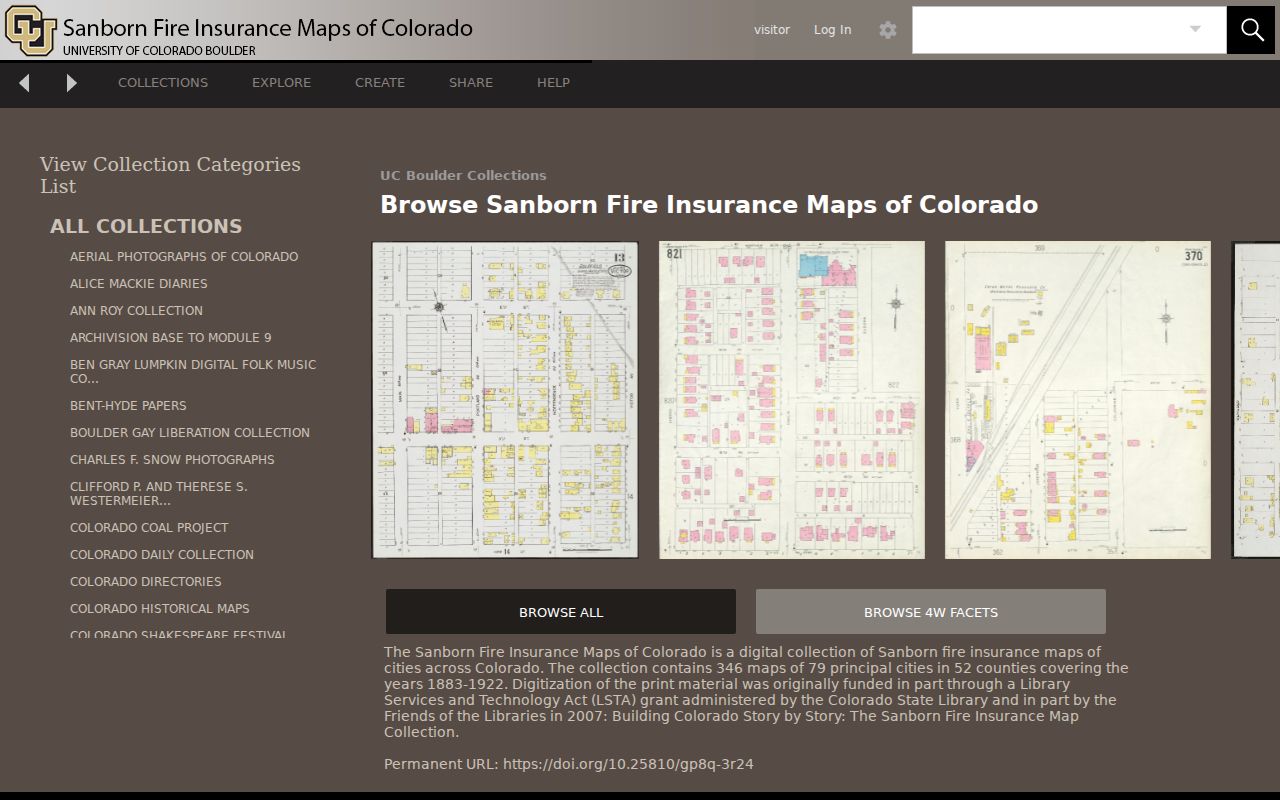
The collection image documents the search surface, not a Northglenn map or a specific former occupant.
Northglenn House-History Request Routes
When online indexes stop, the access chain moves to a counter, phone, mail, library, or archive request. Adams Recording supplies recorded-document and certified-copy routes. Weld provides its recorder and assessor channels for Section 36. State Archives accepts formal collection requests and has an Adams finding-aid trail. DPL and CU provide reference and digital-library help. Anythink Huron and the 2026 bookmobile offer local research access despite no permanent Northglenn branch at inspection.
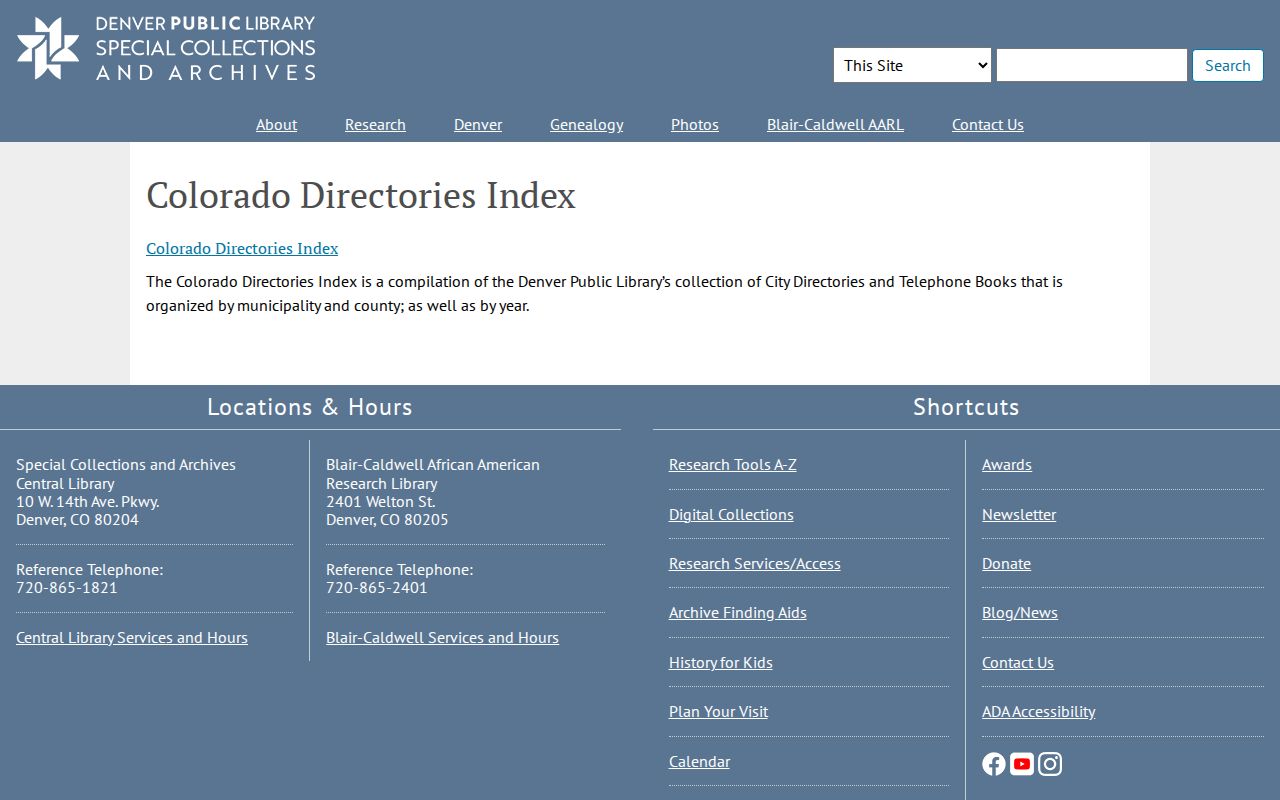
Screenshot source: the DPL directory index is a catalog route for years and place labels before a library request.
For formal archives work, the State Archives request route should name Adams, Weld, the record type, date span, and collection lead.
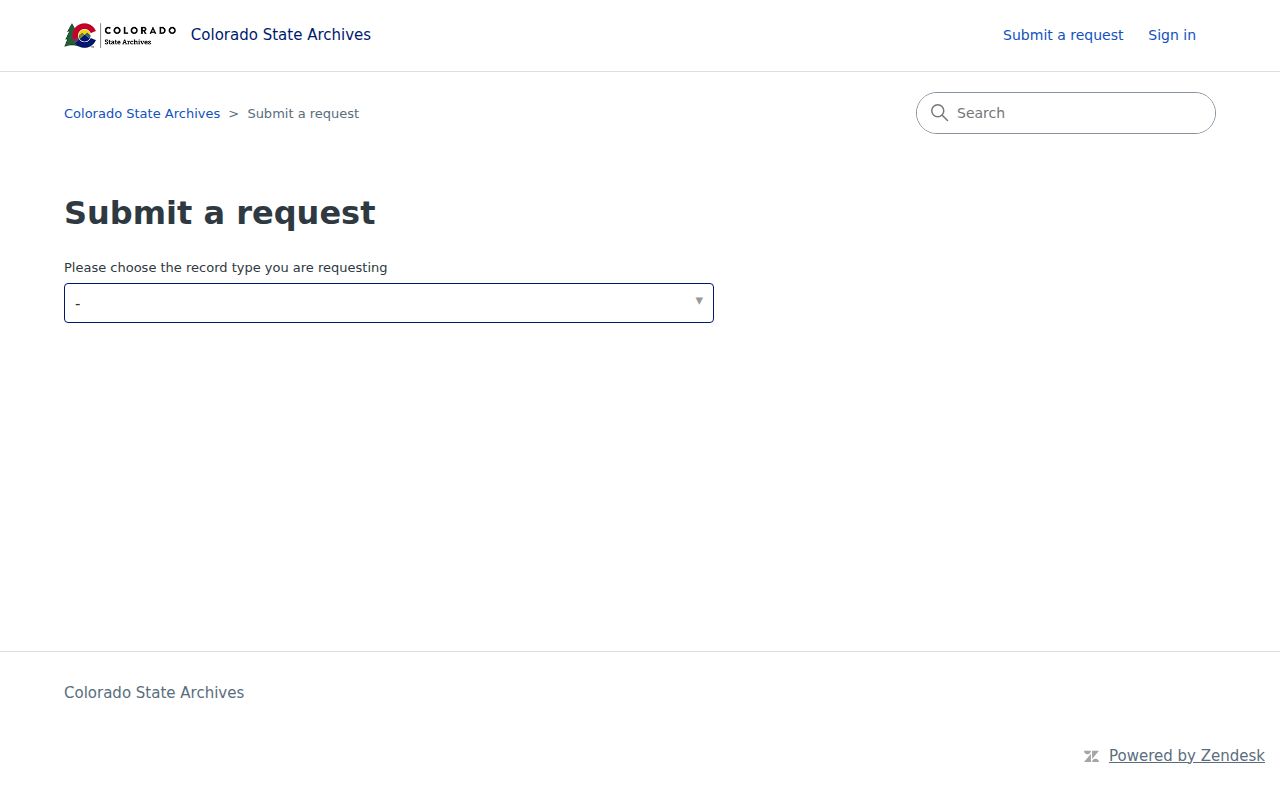
The archives image is a request surface, not a scanned record or a live former-resident result.
The city and county offices can explain current request fields and fees. A legacy Northglenn CORA form should not be treated as a current fee schedule. A narrow request with parcel, instrument, date, or record type is easier to review than a request for all former residents.
When Northglenn's Backward Chain Stops
Every previous residents search has honest stopping points. Adams's online recording cutoff was not exposed. The live Adams parcel card and target deed result were not captured. Northglenn lacks a verified citywide historical household volume and a dedicated obituary index. Common names, changed street numbers, parcel splits, publication lag, OCR errors, and county misrouting can all break a chain.
Write the gap down. Say which year, collection, portal, or field was not available. A “not located” result is more useful than a guessed owner, a borrowed map, or an invented directory run. The Northglenn city directory collection route can take the historical shelf further, while the street directory route handles current parcel work.
A finished house history may end with a recorded owner chain and a few dated address or business clues. Previous residents evidence can be useful without claiming a complete list of previous residents or current occupants.